French Nails8 min read
French Manicure Ideas with Micro Tips, Side Tips, and Double-Lined Detail
The French manicure never really disappears, but it does shift with the way we dress. Right now, the freshest versions are less about a thick white band and more about where the line sits, how fine it looks, and how much negative space you leave behind. Micro tips, side tips, and double-lined details all take a classic nail idea and tighten it into something sharper, lighter, and more fashion aware without making it hard to wear every day. The appeal of these variations is proportion. A whisper-thin tip can make short nails look neat and deliberate. An off-center side tip can add movement without reading loud. A doubled line can create structure while still feeling minimal. The ideas below focus on placement and polish choices that keep the look modern, flattering, and realistic for real life, whether you prefer bare sheer bases, soft color, or a little gleam.

Barely-There White Micro Tips for a Clean, Tailored Finish
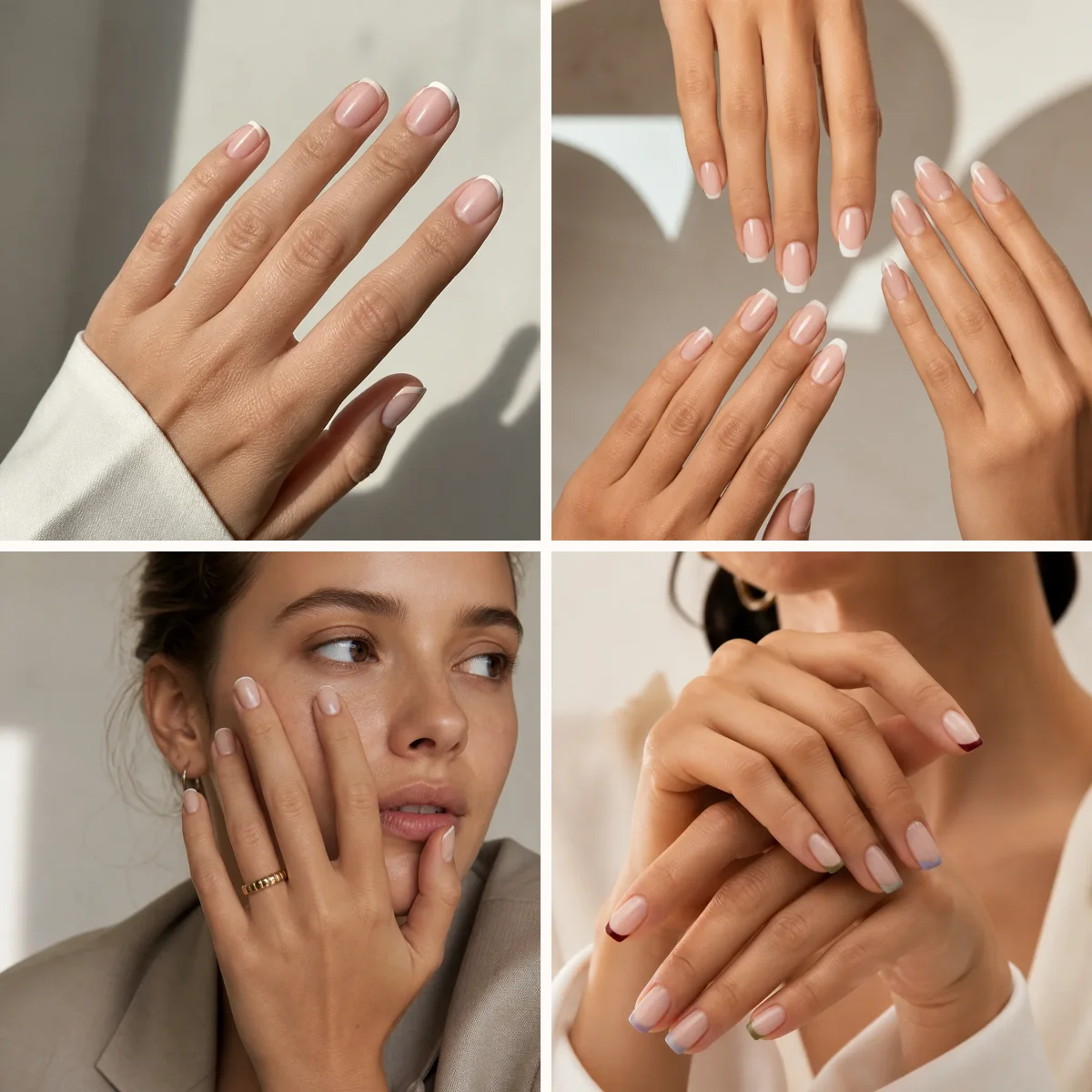
The easiest way to update a French manicure is to shrink the tip until it becomes a fine outline instead of a bold cap. On short squoval or softly rounded nails, a crisp white micro tip gives a polished, almost tailored effect that feels lighter than a traditional French. The key is contrast without bulk: keep the base sheer pink, beige, or milky nude, and let the white line sit right at the free edge so the nail still looks airy. This version is especially flattering if you like understated nails that still photograph beautifully. In the image, the manicure works because everything is restrained: short natural-looking nails, a glossy translucent base, and a white edge that is thin and even across every finger. To recreate it, ask for the line to be painted with a detailing brush rather than built too thick with the bottle brush. A glossy top coat helps the tiny line feel intentional rather than faint, and regular cuticle care matters because a minimal design leaves nowhere to hide dryness or uneven shaping.
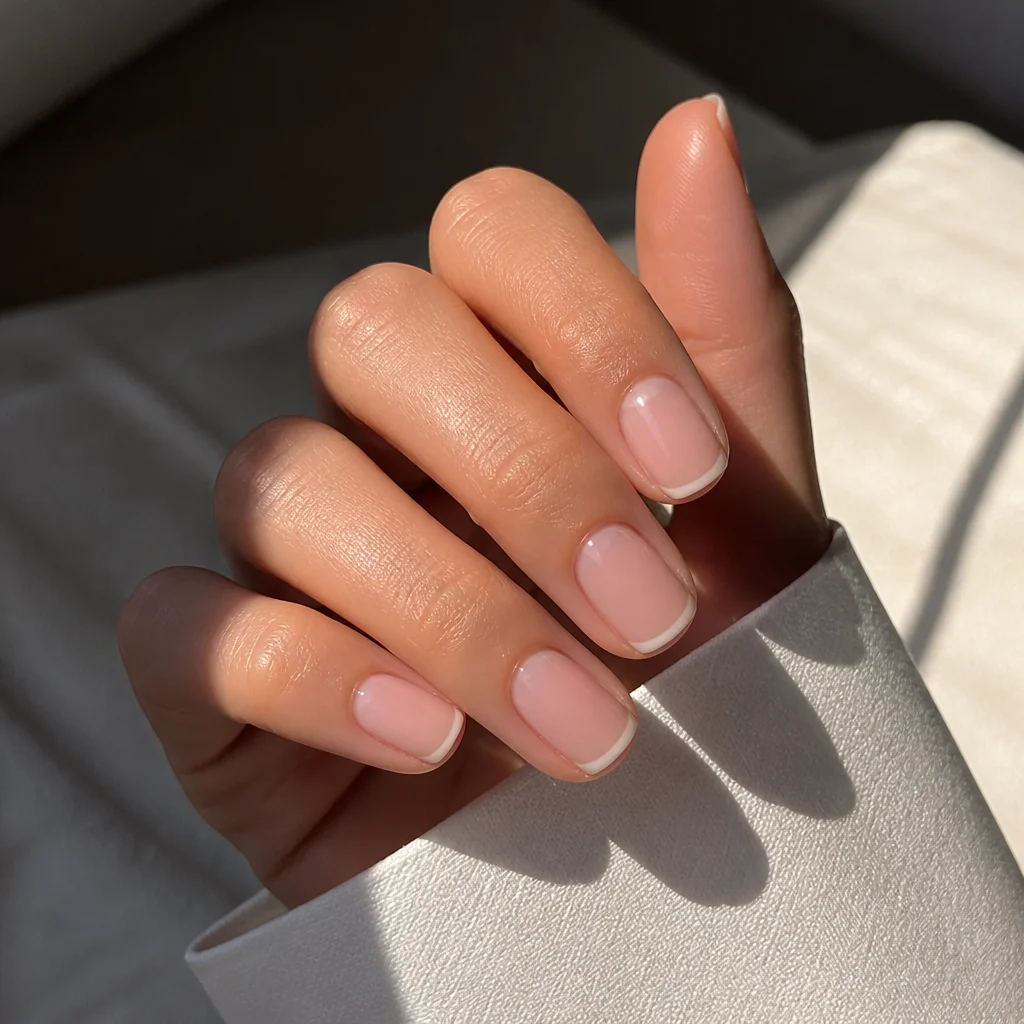
Soft Color Micro Tips That Replace Bright White with Something Gentler
If bright white feels too sharp against your skin tone or wardrobe, try the same micro-tip placement in a softer shade. Cream, dove gray, blush, muted lavender, or pale caramel can create the same refined French structure while blending more naturally into everyday styling. This is a smart option if you want the manicure to work with knitwear, tailoring, or gold jewelry without the cool contrast of classic salon white. The photo for this look highlights a line so fine it almost reads as a shadow, which is exactly why it feels modern. A sheer beige base keeps the nails healthy-looking, while the muted tip color adds definition only when the hand moves. Choose a tip shade that is one clear step away from your base, not too close or it will disappear entirely. This idea also grows out gracefully, making it useful if you prefer a manicure that stays elegant between appointments.
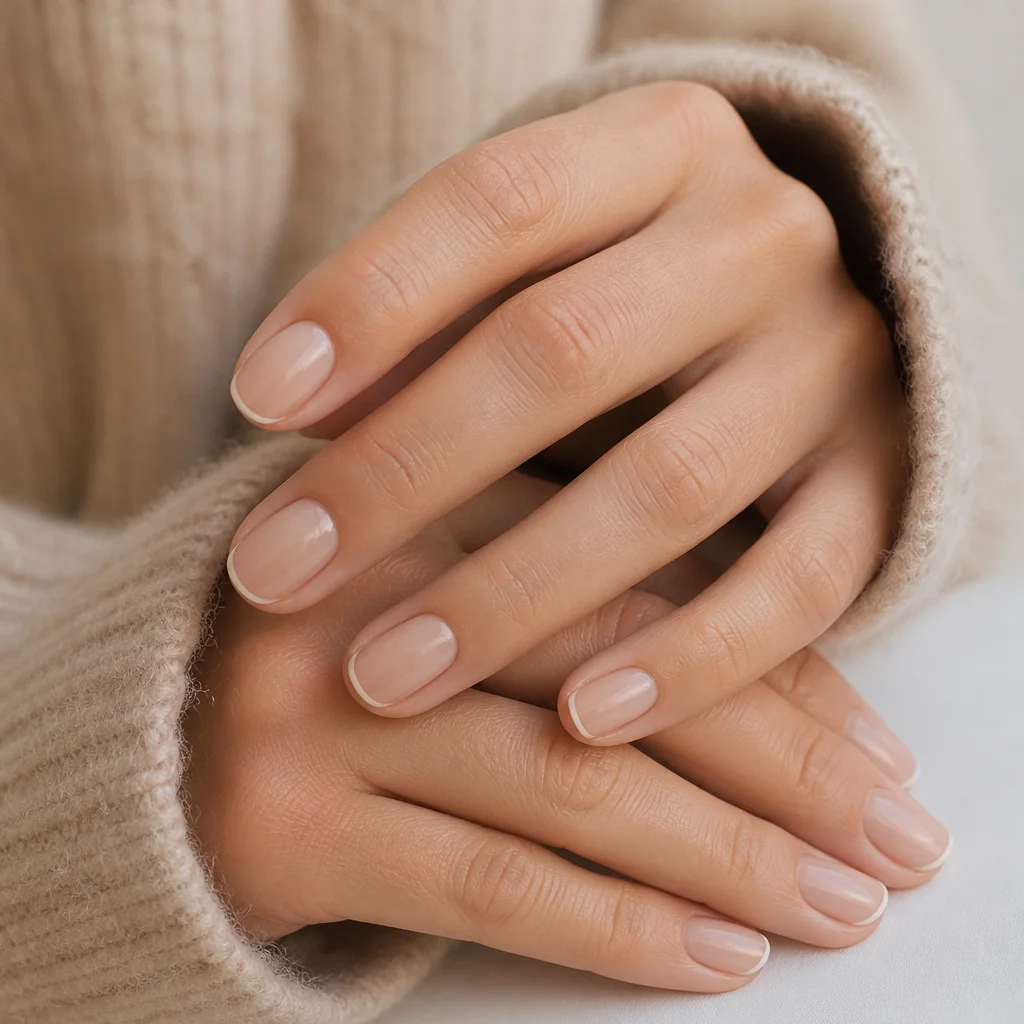
Diagonal Side Tips That Add Movement to Almond Nails
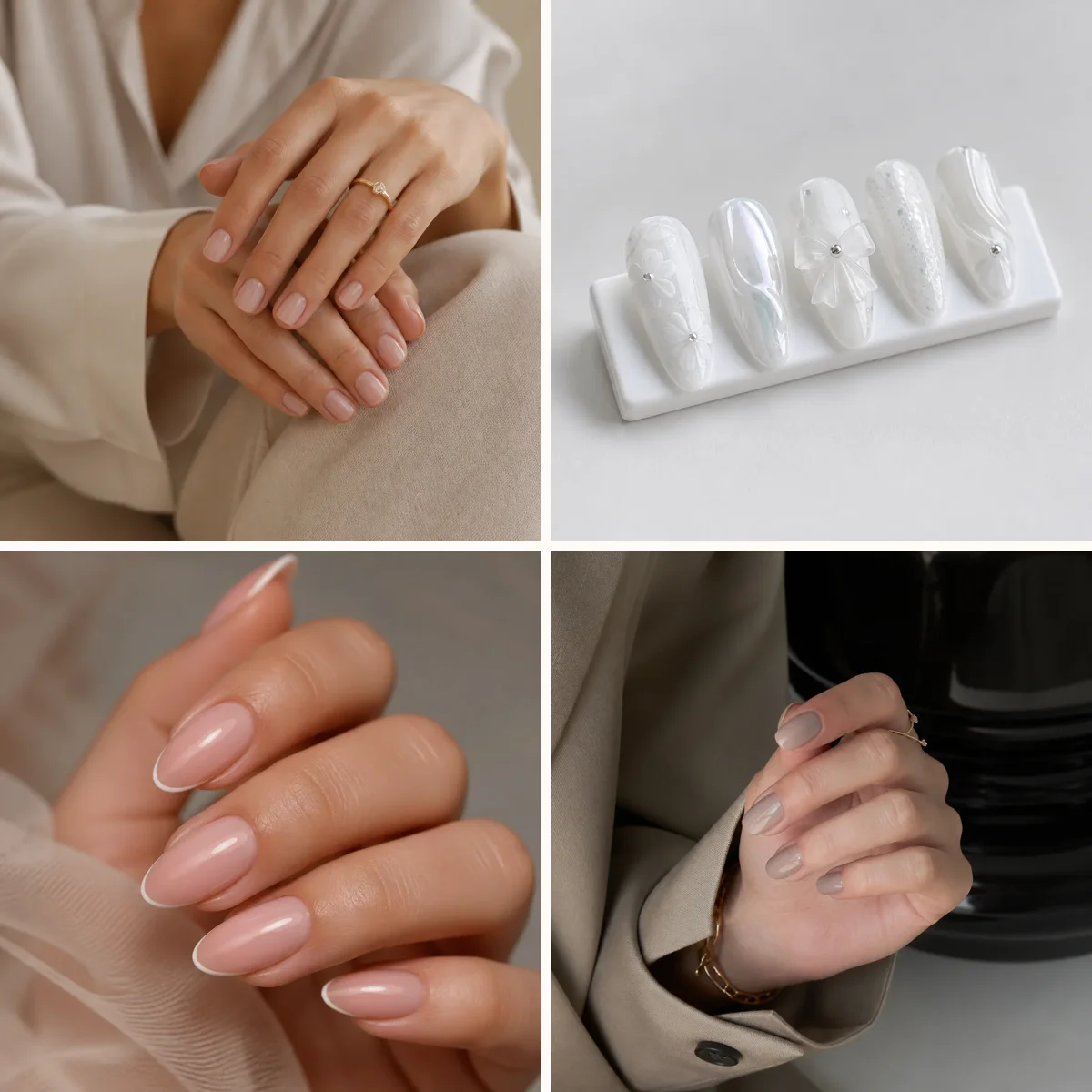
Side tips are one of the most wearable directional updates to the French manicure because they shift the line off center without making the nail look busy. Instead of tracing the entire free edge, the color starts at one sidewall and sweeps diagonally across part of the tip. On almond nails, that angled placement elongates the fingers and gives a sense of motion, almost like a subtle winged eyeliner effect for nails. In the corresponding image, the diagonal sweep is clean and balanced rather than dramatic, which keeps the design editorial but still easy to live with. This is the version to try if you want something noticeable from close up yet still neutral from a distance. Ask for a sheer rosy or milky base and a side tip that reaches only about halfway across the nail. A high-contrast shade like ivory, black, or deep espresso will make the angle more graphic, while soft taupe or pale blue keeps it quieter.
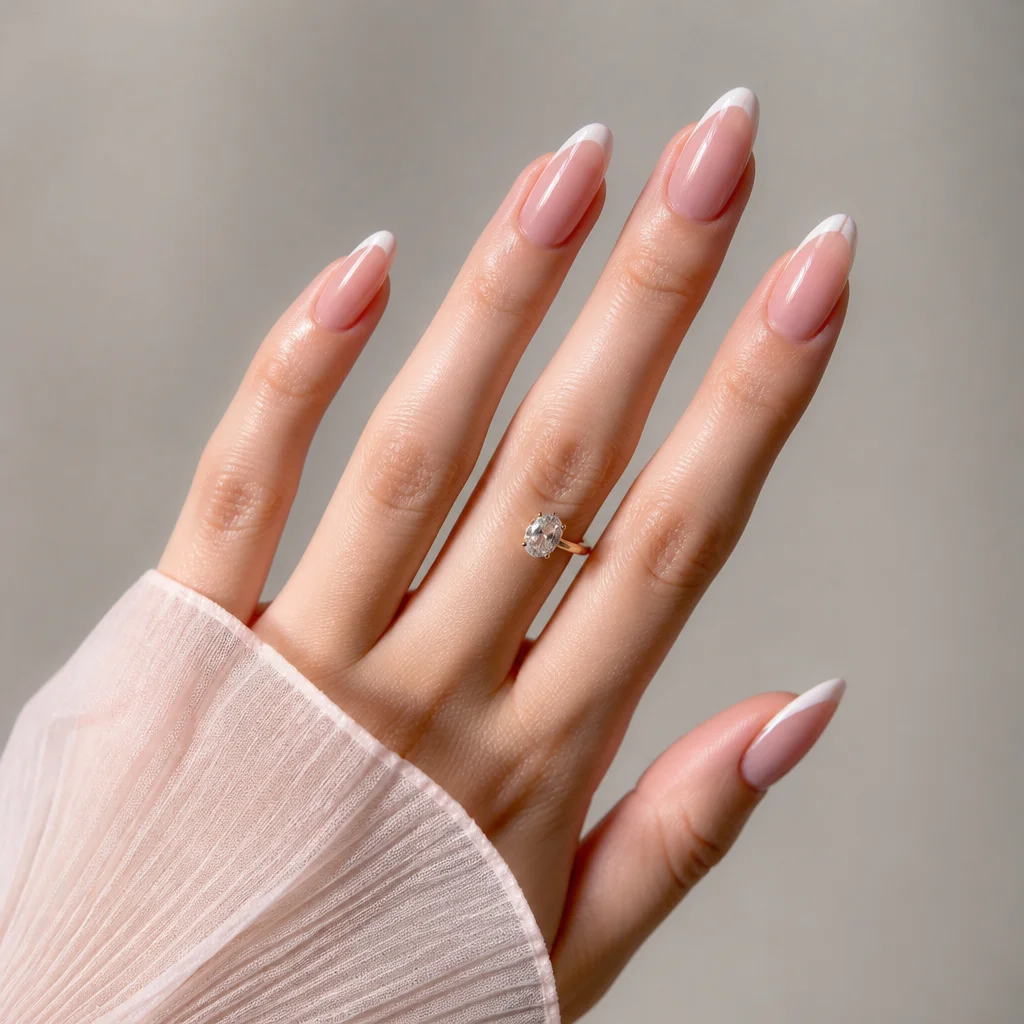
Reverse-Side French Placement for a Sleek, Unexpected Accent
A more fashion-forward variation of the side tip is to place the detail asymmetrically so it hugs one corner of the nail rather than cutting across the whole edge. Think of it as a corner French: a small crescent or angled band that lives on the outer tip, leaving most of the nail bare. This creates a sleek, negative-space look that feels deliberate and architectural, especially on oval or short almond shapes. The image here shows why restraint matters. The corner detail is slim, glossy, and carefully matched across both hands, which prevents the asymmetry from looking random. This style pairs particularly well with neutral bases that mimic the natural nail bed, because the open space becomes part of the design. If you want extra definition, outline the side detail in a slightly deeper tone than the main tip color. It is a subtle way to make the shape read clearly without adding full nail art.
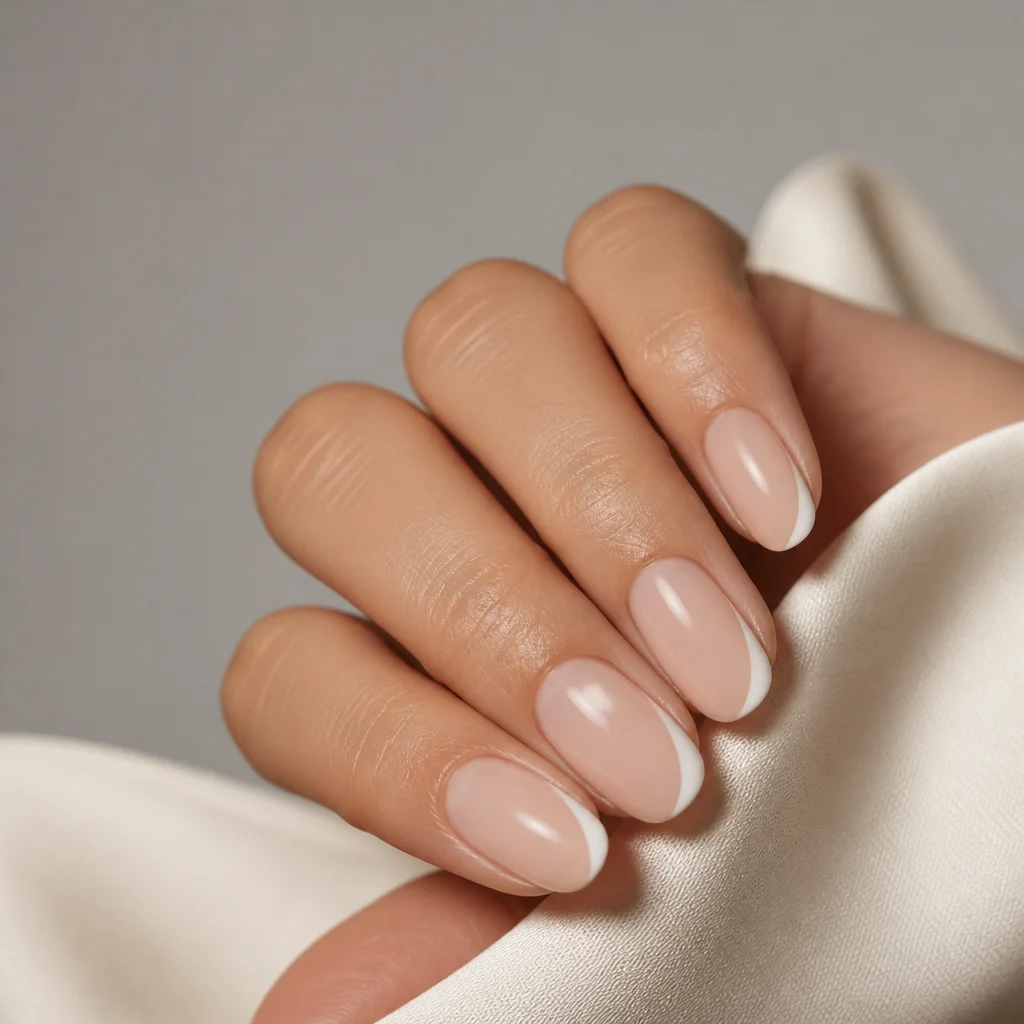
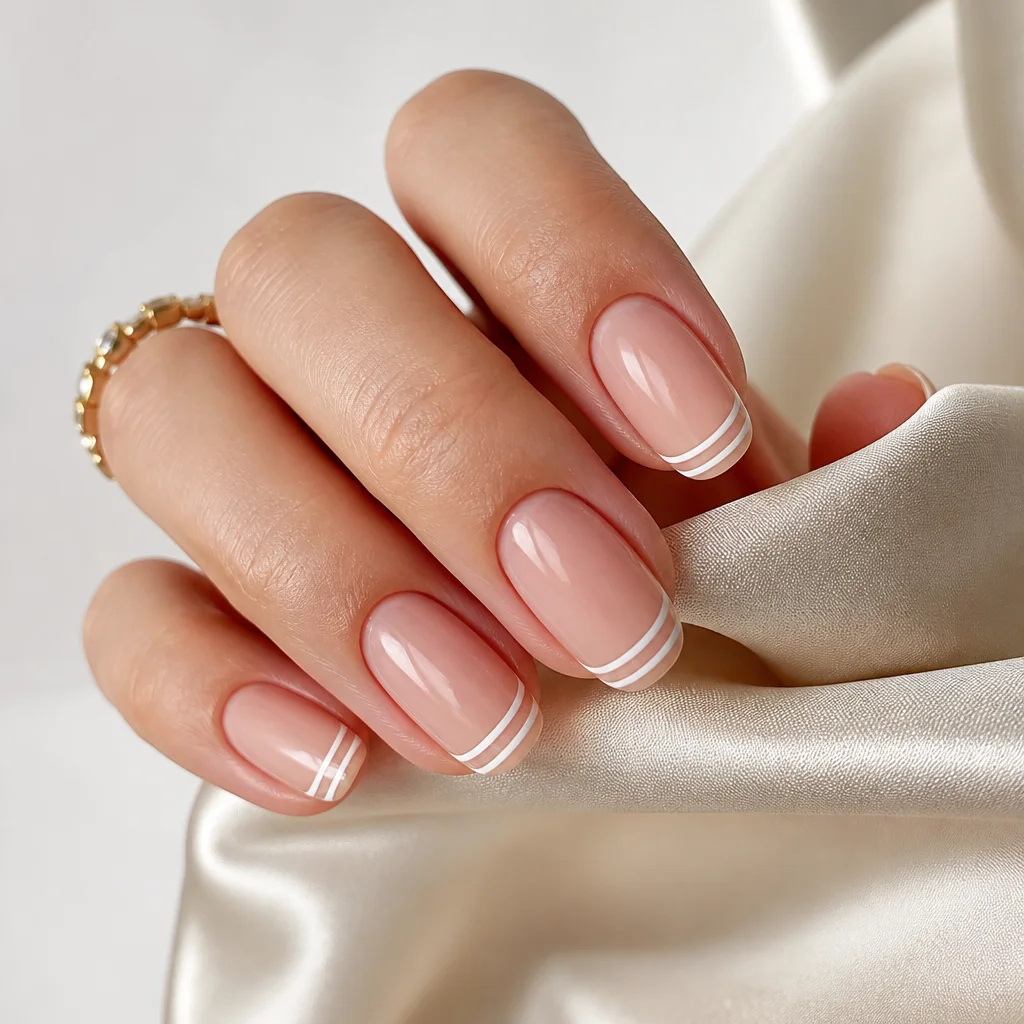
Double-Lined White French for a Crisp Layered Effect
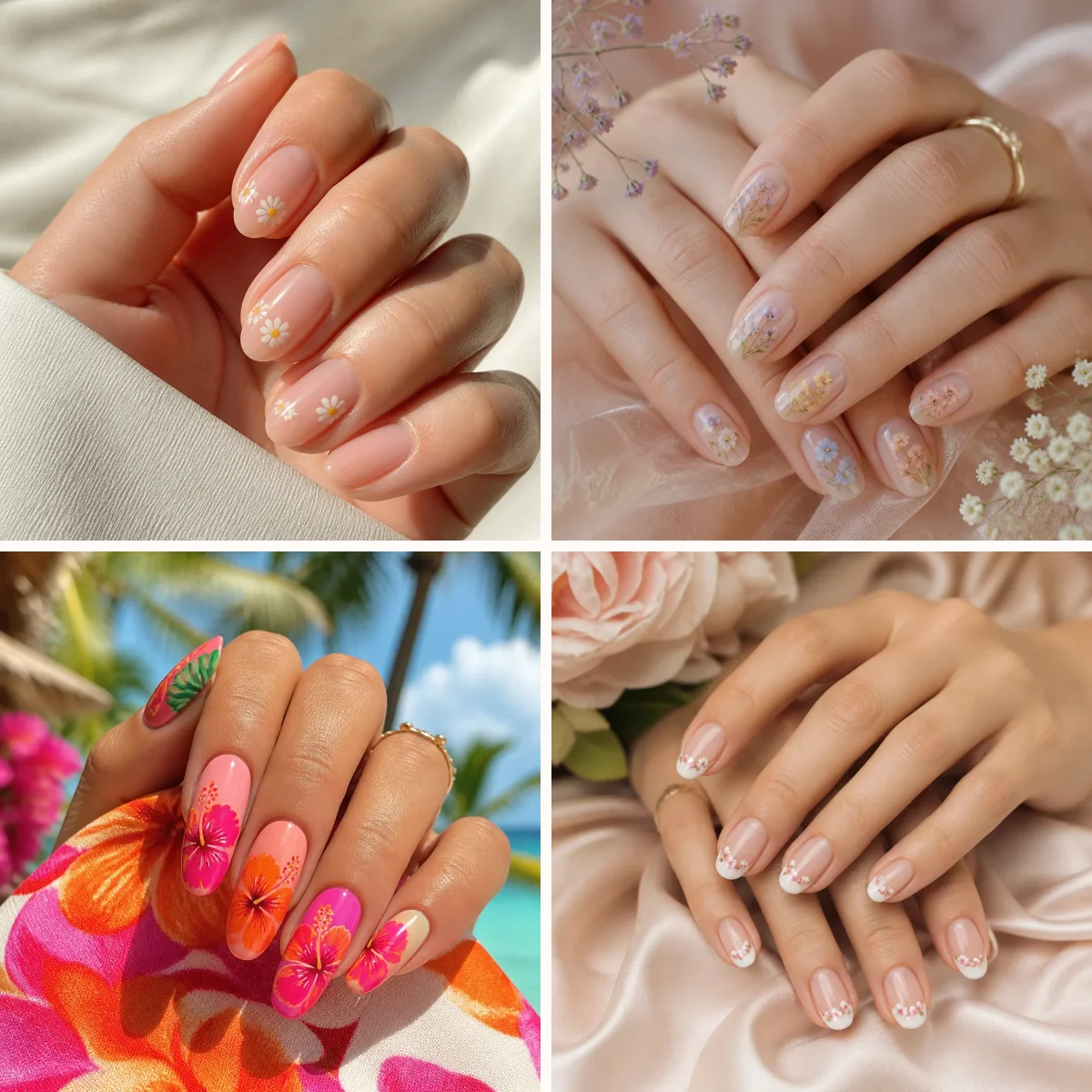
Double-lined detail gives the French manicure more structure while keeping it minimal. Instead of one tip line, you use two parallel arcs near the free edge: one at the very tip and a second just beneath it, leaving a sliver of negative space between. The result feels clean, graphic, and a bit more elevated than a standard French, especially when the spacing is precise and the lines are equally thin. In the photo, the success of the look comes from symmetry and breathing room. The two white lines follow the nail shape closely without becoming heavy, and the clear glossy base keeps the overall effect bright rather than crowded. This design works best on nails with enough length to let the lines sit comfortably, but it does not require long extensions. Keep the distance between lines narrow and consistent, and avoid adding extra accents on every nail so the doubled edge stays the focal point.
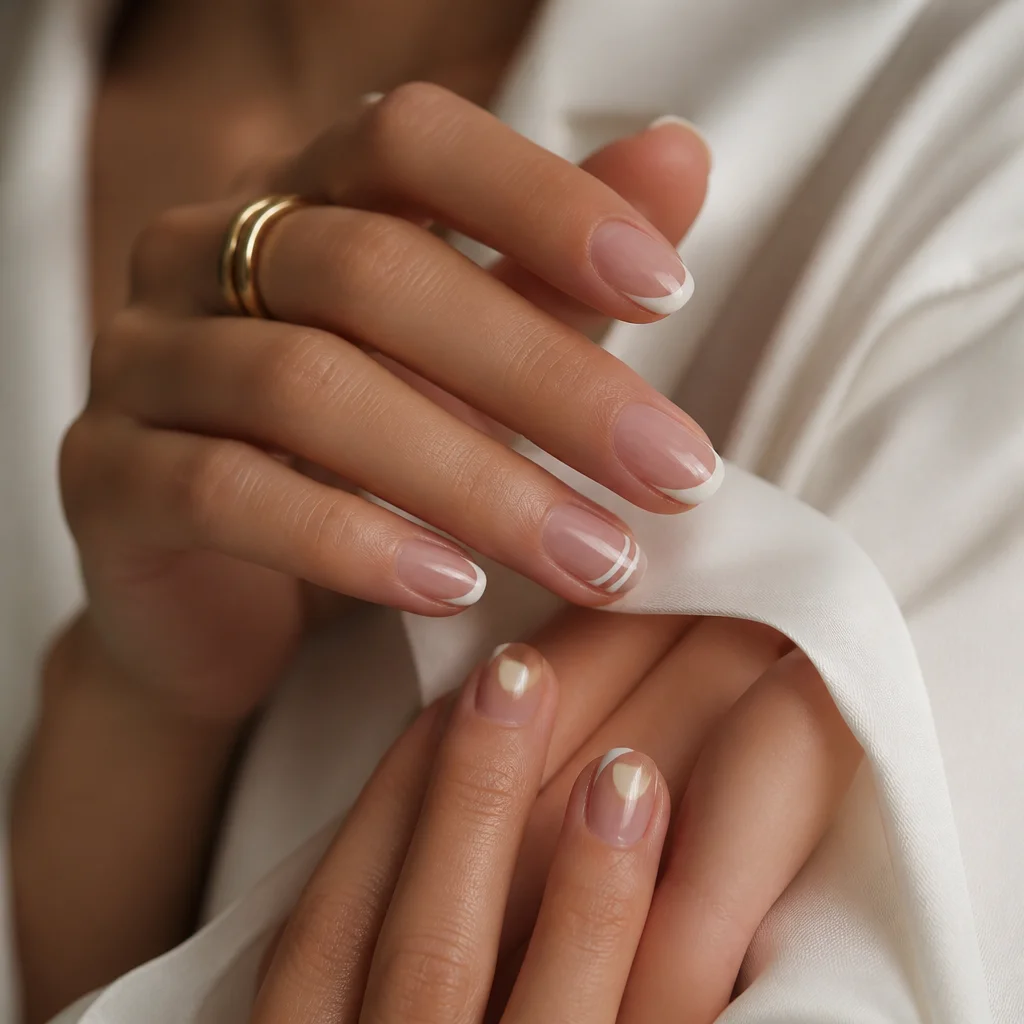
Mixed Micro and Double Lines for a Subtle Accent Manicure
If you love the precision of double-lined French details but want something easier for everyday wear, limit the layered effect to one or two nails on each hand and keep the rest in micro tips. This creates a manicure with rhythm: most nails stay simple, while the accent nails offer a closer-look moment. It is a useful approach for anyone who likes editorial ideas but still needs their nails to feel versatile at work or with changing outfits. The corresponding image shows the balance beautifully, with uniform micro tips on most fingers and a neatly doubled line on the ring finger adding just enough variation. Because all the nails share the same sheer base and color family, the design still reads cohesive. This is also a practical salon choice if you are trying a trend for the first time. You get the impact of line work without committing every nail to a more exacting design that may show imperfections more quickly.
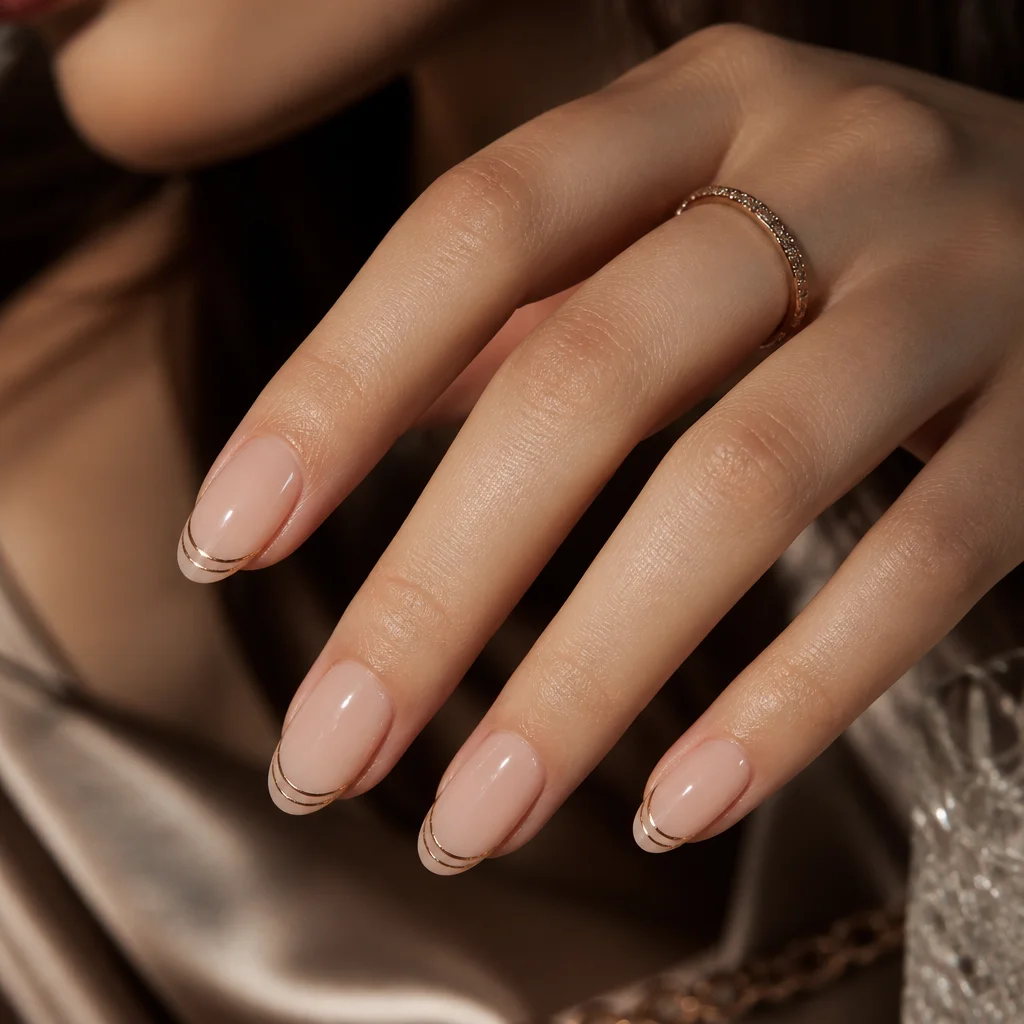
Fine Metallic Double Lines That Catch Light Without Looking Busy
For a dressier take, swap one or both French lines for metallic polish in silver, soft gold, or champagne. The trick is to keep the metal application hair-thin so it reads as a glint rather than a stripe. Fine metallic double lines can make the manicure feel evening-ready, but because the placement is still rooted in French structure, the result stays more refined than glitter-heavy nail art. In the image, the metallic detail catches light along the curved edge of the nail, giving dimension without overwhelming the clean base. This works especially well for events, weddings, or holiday dressing when you want subtle shine. Pair warm metal tones with peachy or beige bases, and cooler silver with rosy or translucent pink. If your jewelry changes often, champagne is the easiest middle ground because it flatters a wide range of skin tones and accessories.
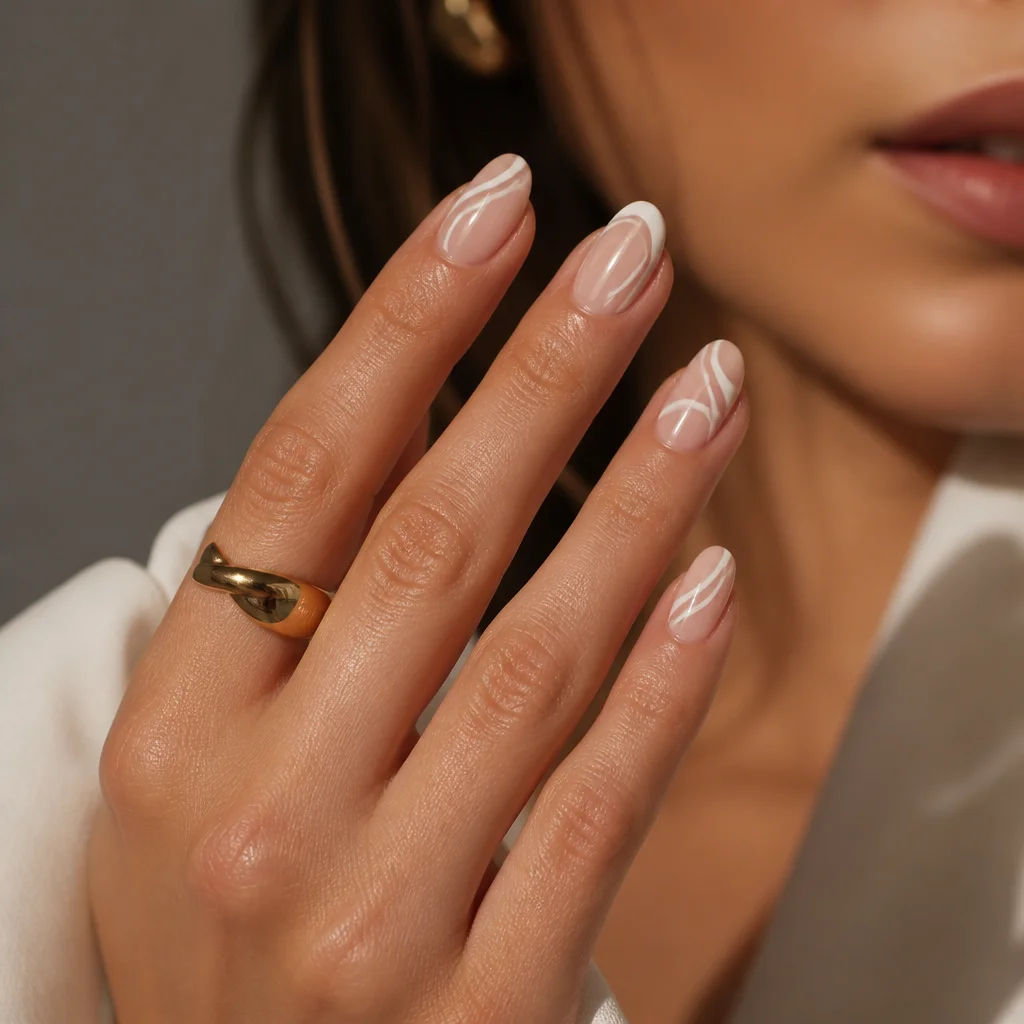
Combining Side Tips and Double Lines for the Most Editorial Wearable Look
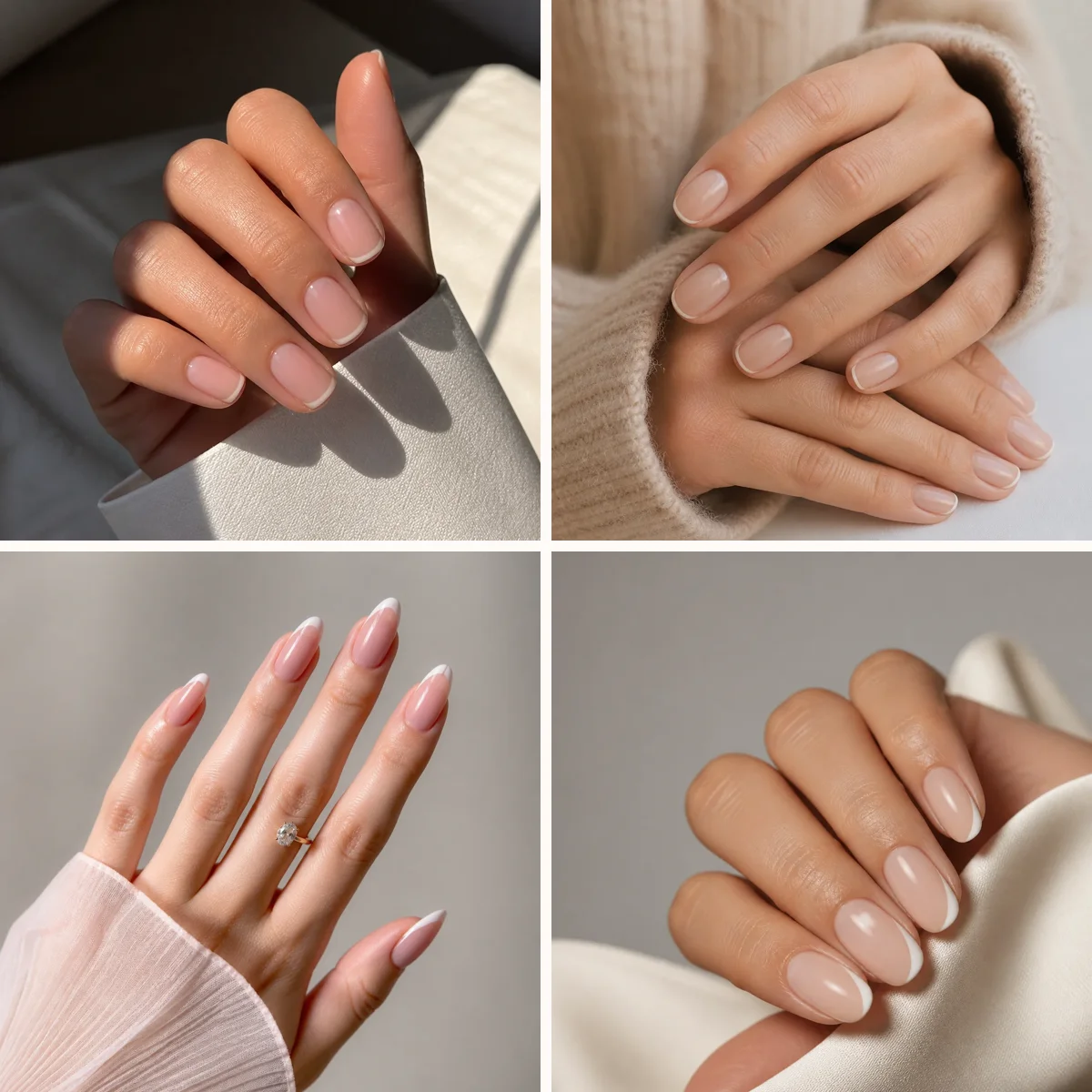
The most current interpretation brings placement and proportion together by layering a side French with a second fine echo line. One diagonal or corner tip establishes the shape, and a parallel line nearby reinforces it. Because the design uses asymmetry and repetition at once, it feels fresh and distinctly editorial, yet it can still remain wearable if the palette is neutral and the lines stay slim. The final image captures this idea with a sheer nude base, an angled ivory side tip, and a second barely-there line tracing the same direction. The result is directional but not loud. To make this combination work, choose only one statement element: either stronger contrast, a sharper angle, or a metallic second line. Not all three at once. Keep nail length moderate, maintain consistent spacing across the set, and let glossy finish tie the whole manicure back to the timeless simplicity that made French nails enduring in the first place.
Images are AI-generated inspiration concepts.
Explore the categories ↗