Kids’ Birthdays8 min read
Kids’ Birthday Color Palettes That Make Any Theme Feel Fresh
A strong color palette can make a kids’ birthday party feel imaginative, pulled together, and completely original, even without a single licensed character in sight. Instead of building the look around a specific movie or cartoon, start with two or three colors that set the mood, then repeat them through balloons, desserts, paper goods, and tabletop details. The result feels playful but polished, and it gives you much more flexibility when shopping, crafting, or mixing pieces you already own. The easiest palettes for children’s parties balance one main color, one supporting shade, and one accent that adds energy. Soft shades can keep a busy room calm, while brighter accents bring enough fun for a celebration. The ideas below show how to use color pairings in practical ways, from cake decorations and fruit platters to napkins, streamers, and favor displays, so any theme feels fresher, more personal, and easier to style.

Start With a Three-Color Formula That Does the Heavy Lifting
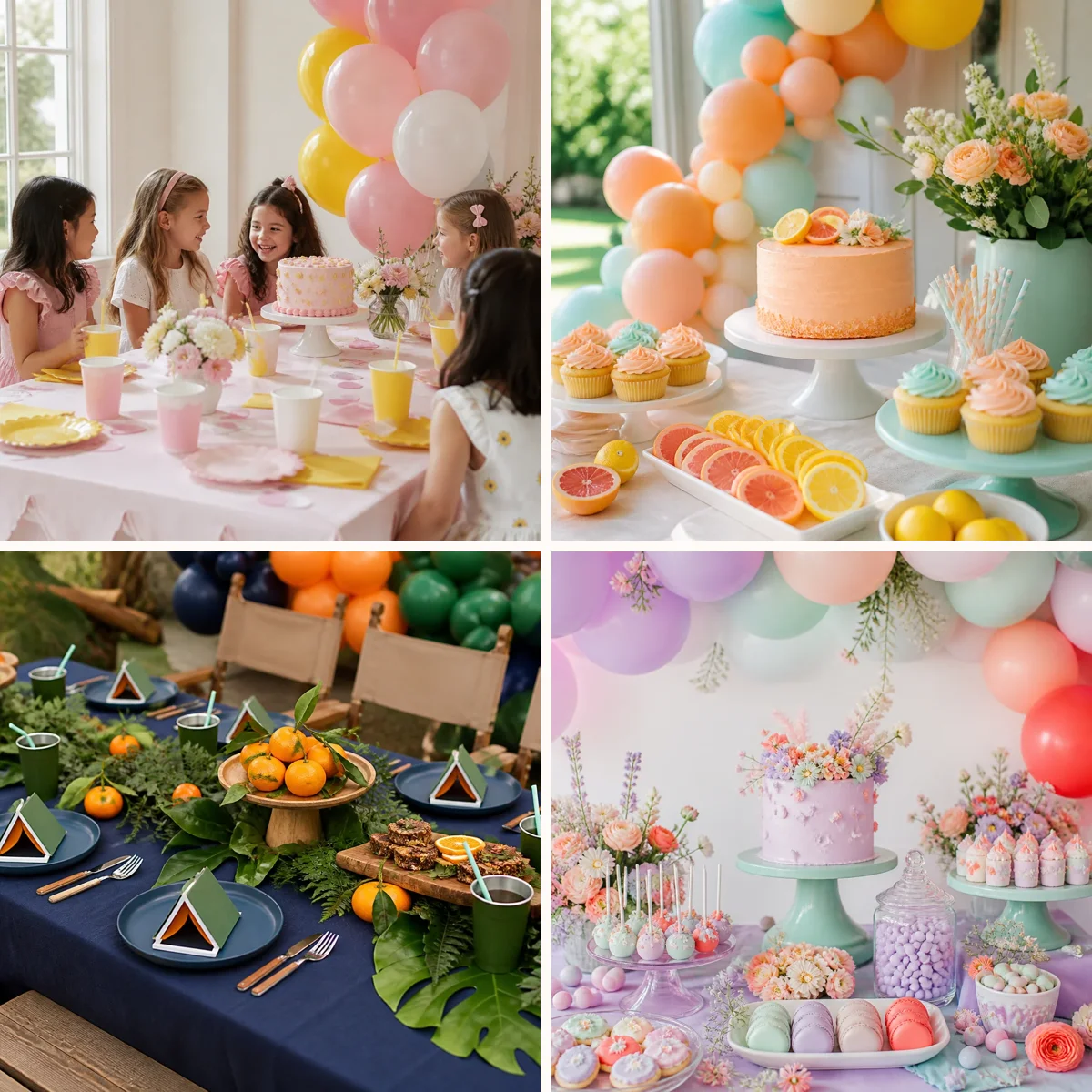
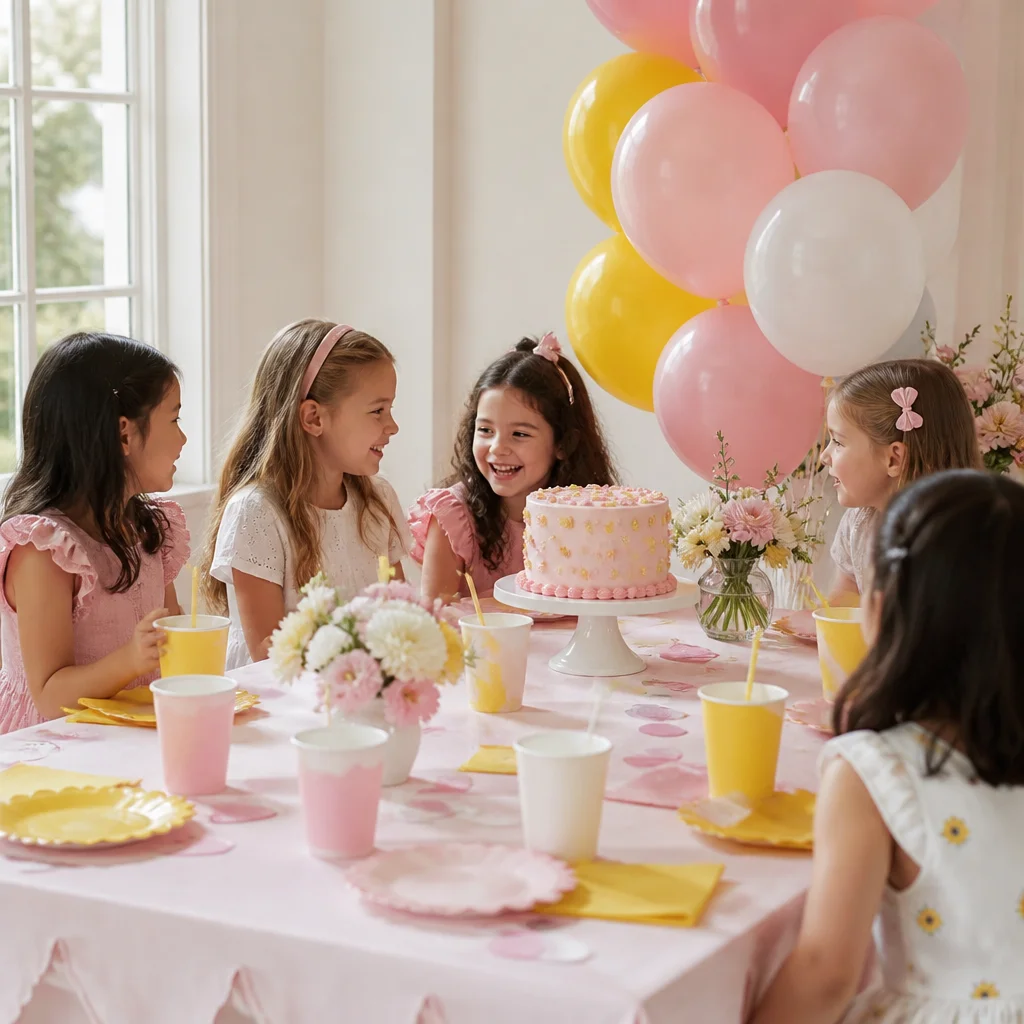
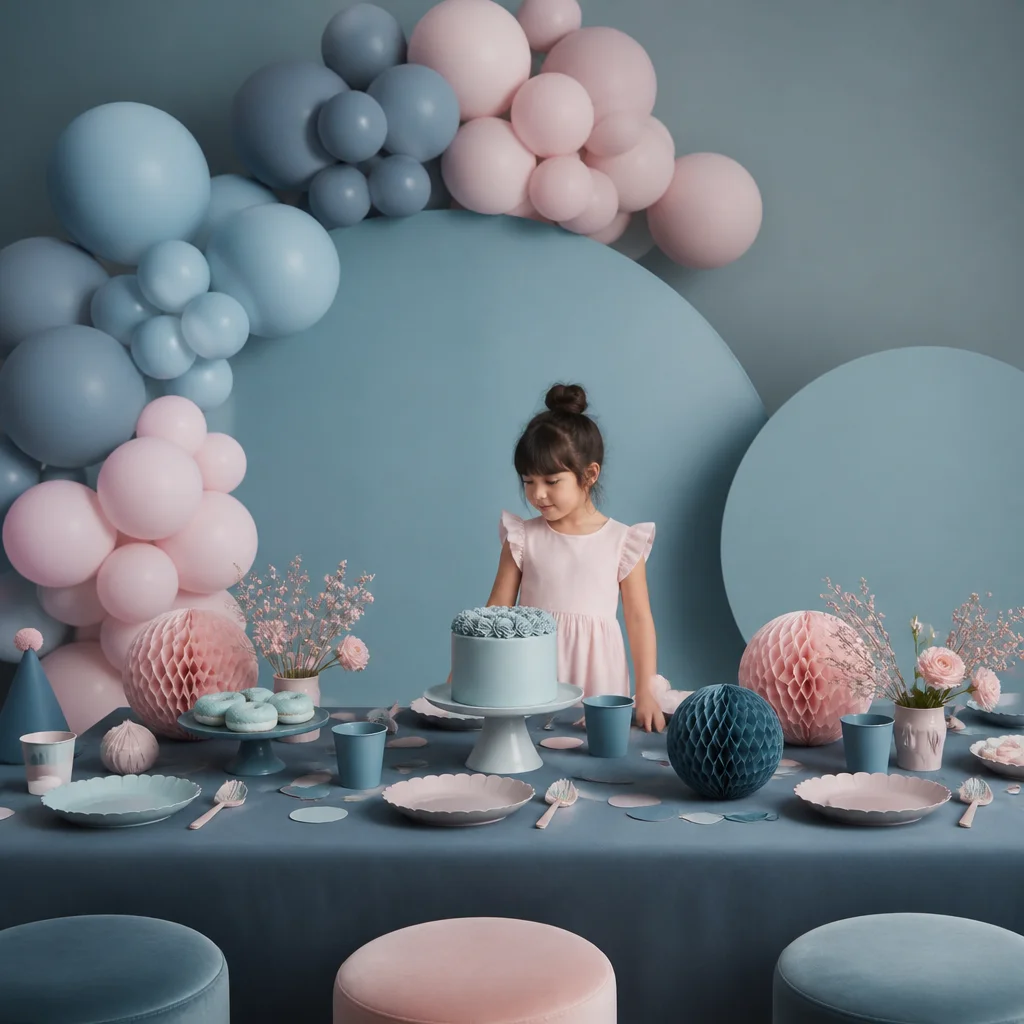
The simplest way to create a fresh party palette is to choose one dominant color, one secondary color, and one small accent shade. Think mint, butter yellow, and cherry red; or sky blue, tangerine, and white. Use the dominant color on the biggest elements such as the tablecloth, backdrop, or balloon cluster. Let the secondary color appear in plates, cups, and dessert toppers, then bring in the accent sparingly on candles, ribbon, or a few standout sweets. This keeps the party from looking busy while still feeling lively enough for kids. The image here shows a birthday table anchored by a soft main color with two cheerful supporting shades layered through balloons, napkins, and a cake stand. It is a useful reminder that repetition matters more than quantity. When the same three colors appear in several places, the party looks intentional, even if the supplies are inexpensive and the theme itself is very loose.
Try Peach, Aqua, and Lemon for a Sunny All-Ages Look
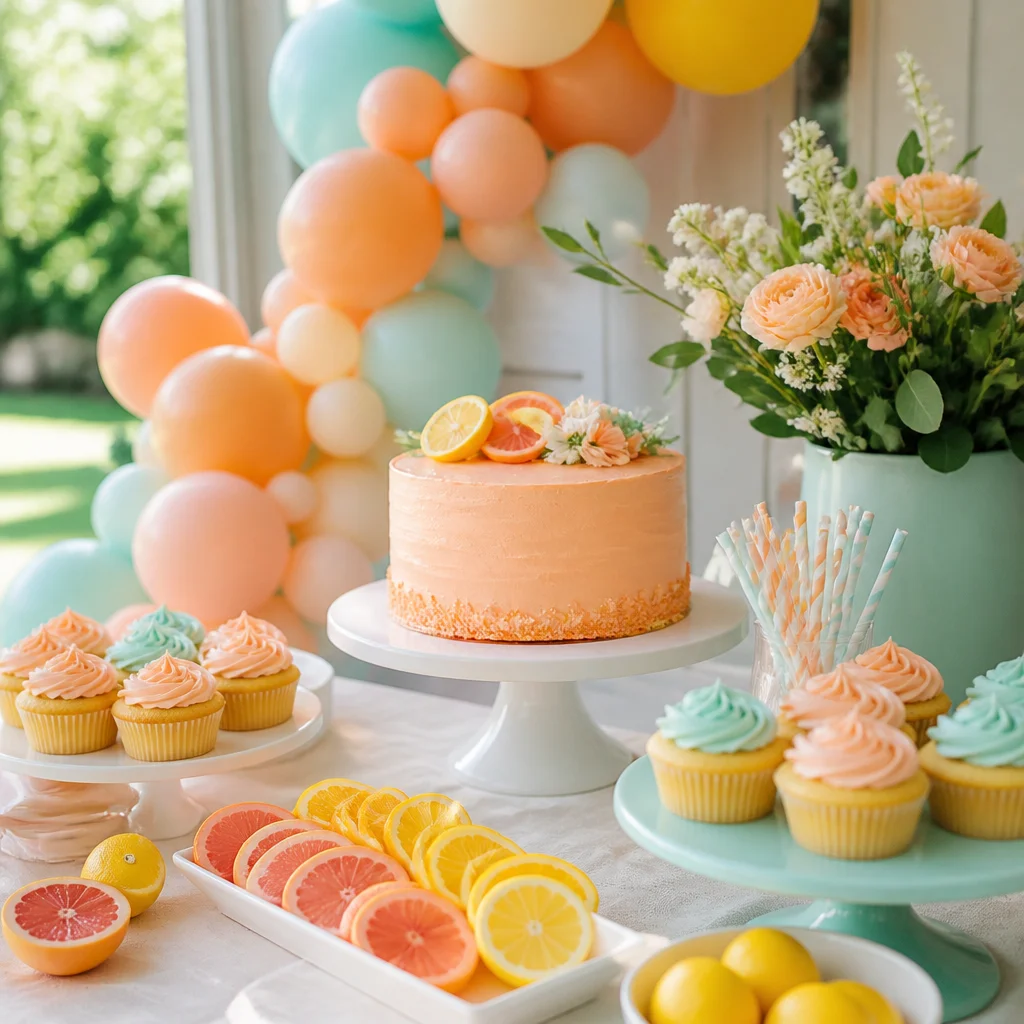
If you want a palette that feels upbeat without becoming too sugary, peach, aqua, and lemon are a reliable combination. Peach brings warmth, aqua keeps it airy, and lemon adds a crisp pop that reads cheerful on everything from cookies to striped paper straws. This trio works especially well for summer birthdays, backyard picnics, pool parties, or generic animal and nature themes because it feels bright but not overly babyish. In the photo, the palette comes through in a dessert setup with frosted cupcakes, sliced citrus, and a loose balloon garland overhead. This is a smart styling move because desserts naturally carry color without much effort. A plain vanilla cake can be transformed with peach buttercream swirls, aqua cake plates, and a few lemon-yellow candies, giving the entire party table a fresh look without needing complicated decorations.
Use Navy, Grass Green, and Orange to Refresh Adventure Themes
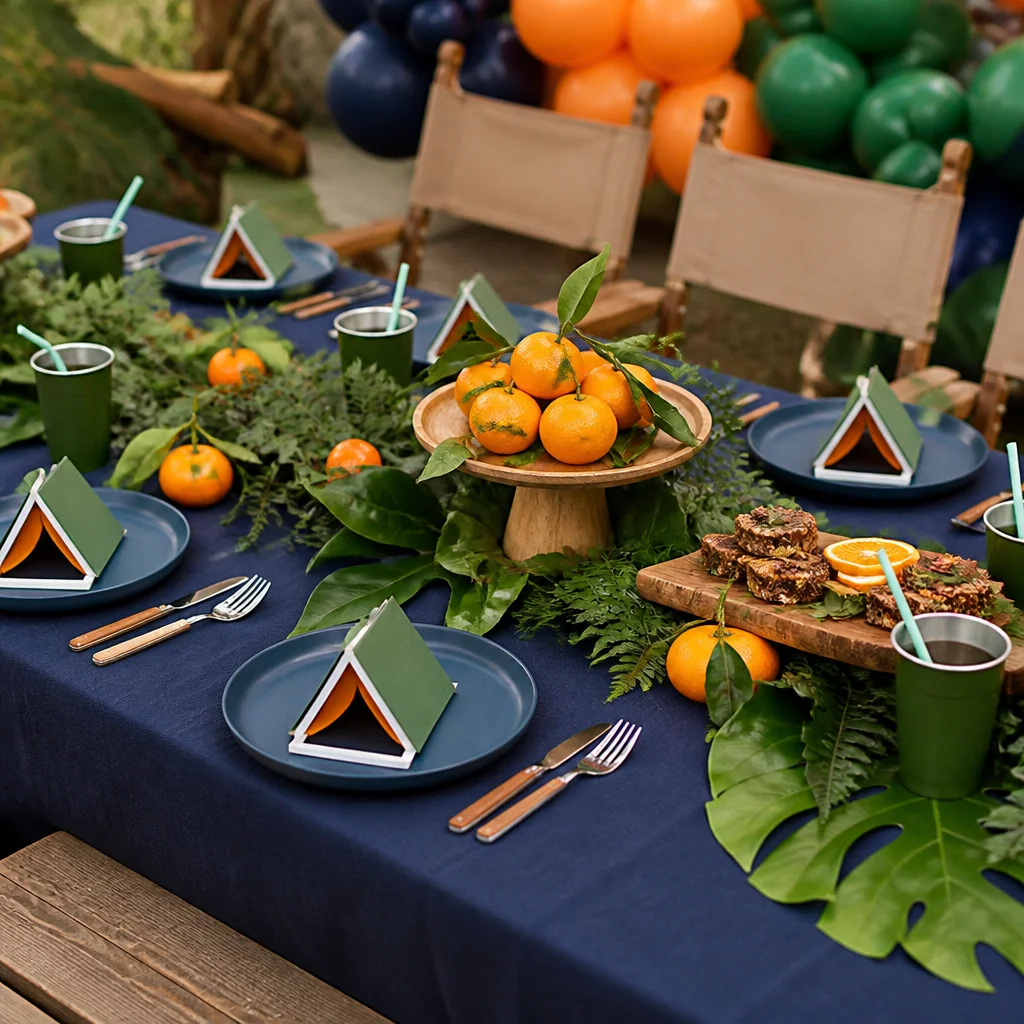
Many kid party themes lean on primary colors, but swapping them for slightly deeper or earthier tones can make familiar ideas feel new. Navy, grass green, and orange work beautifully for adventure, dinosaur, camping, bug, or sports-inspired birthdays. Navy grounds the palette so it does not feel chaotic, green adds energy, and orange creates the bright note that keeps it kid-friendly. The corresponding image features a long table with green foliage details, orange fruit accents, and navy plates that sharpen the whole scene. A practical tip here is to use natural items as part of the palette: clementines, limes, leaves, and wooden serving boards all help support the colors while adding texture. This makes the setup feel more layered and less dependent on store-bought themed decorations.
Build a Sweet Modern Party With Lavender, Mint, and Coral
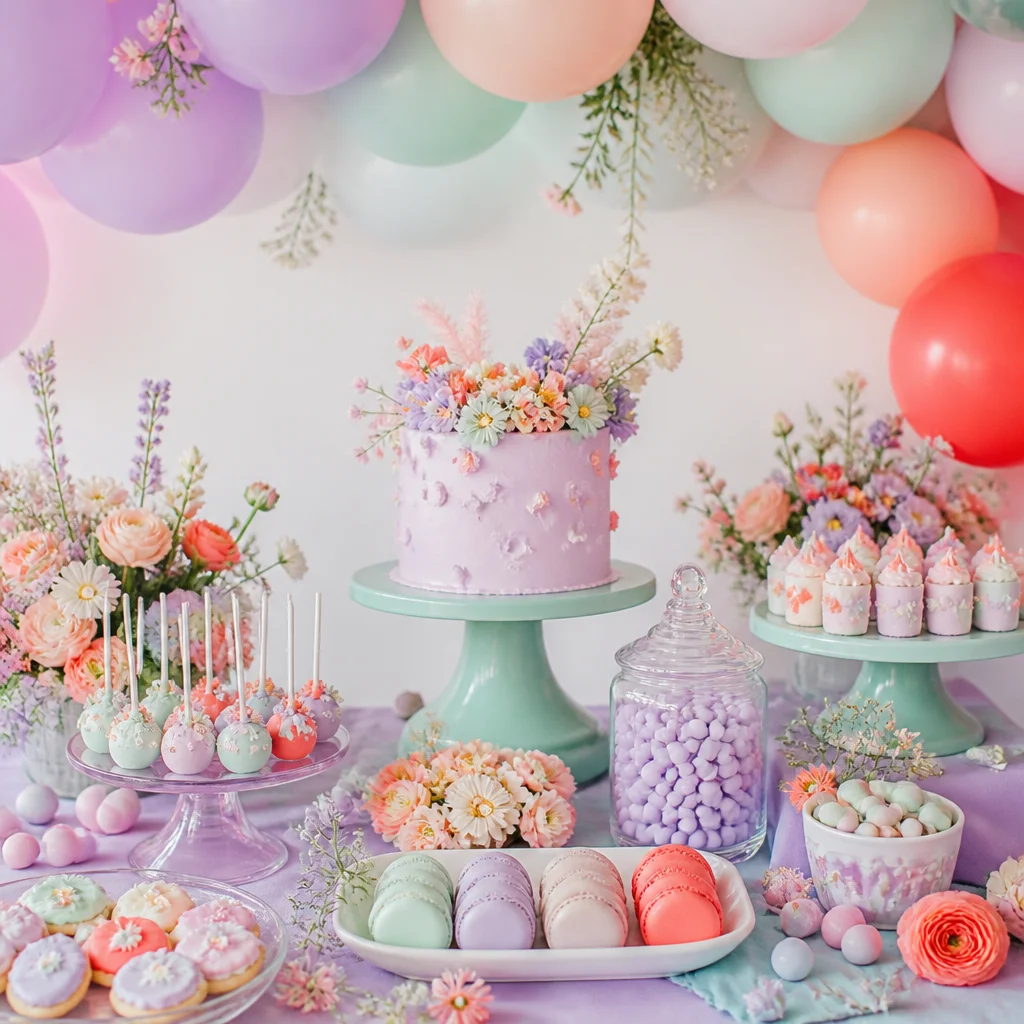
For a party that feels whimsical without falling into predictable pink overload, try lavender, mint, and coral. Lavender softens the look, mint keeps it cool and playful, and coral adds enough brightness to stop the palette from feeling washed out. This combination suits art parties, garden birthdays, fairy-inspired celebrations, or any gathering where you want the room to feel light and imaginative rather than loud. The image for this section centers on a cake and favor table where pastel tones are mixed with a few sharper coral details in flowers, candies, and napkins. That balance is the key. When using softer shades, include one color with more punch so the photos do not fade into the background. Even a small cluster of coral balloons or a tray of berries can give pastel styling the contrast it needs.
Let Balloons Carry the Palette Instead of Every Decoration
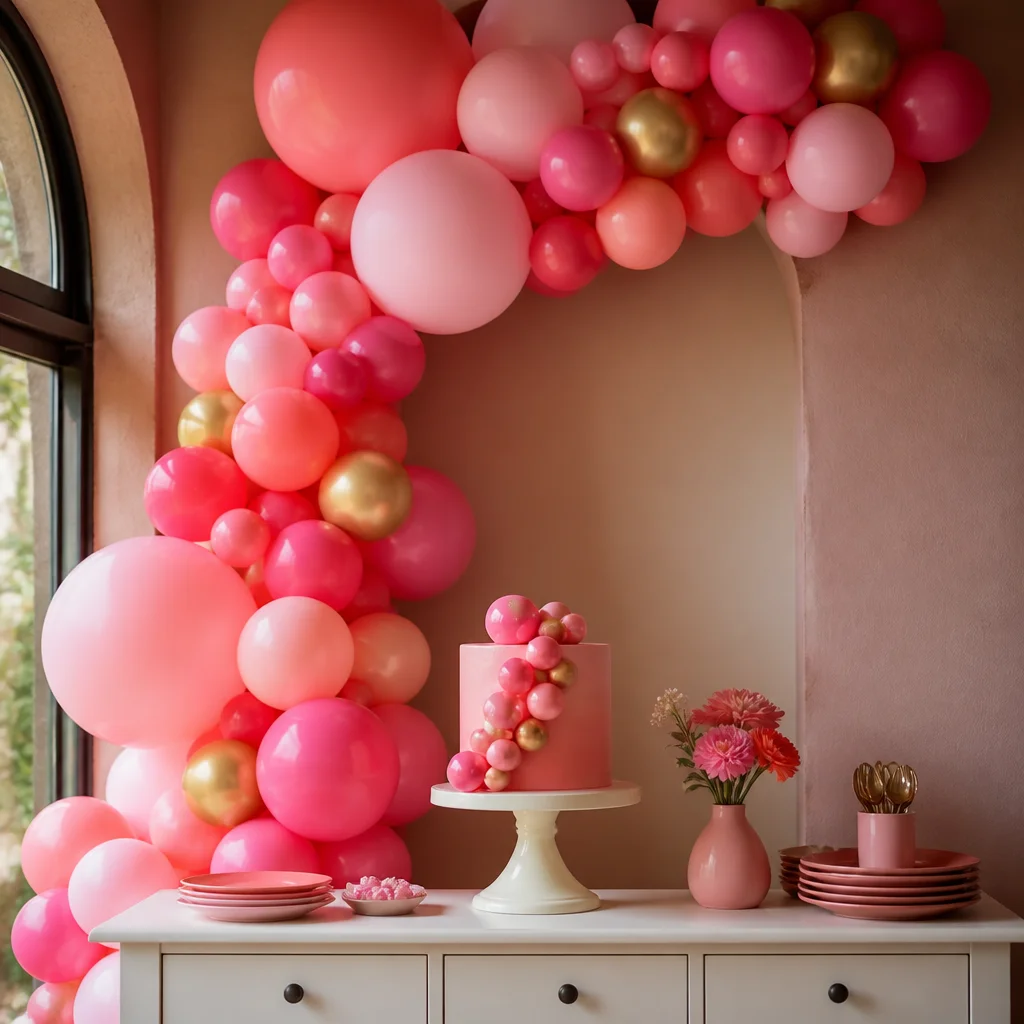
You do not need every party item to match perfectly if the balloons clearly establish the palette. A balloon installation in two main colors plus one metallic or neutral accent can do most of the visual work, allowing the rest of the party to stay simple. This is especially helpful for busy families who want a strong look without hunting down coordinated versions of every cup, plate, and favor bag. In the photo, a balloon arrangement frames the cake area while the table below remains intentionally restrained with solid-color dishes and minimal props. This approach works because balloons are large, high-impact, and easy to see from across the room. If your palette includes a strong shade like cobalt or hot pink, use more of the softer companion color in the balloon mix so the overall effect stays playful rather than overwhelming.
Use Dessert Accents to Introduce a Bold Third Color
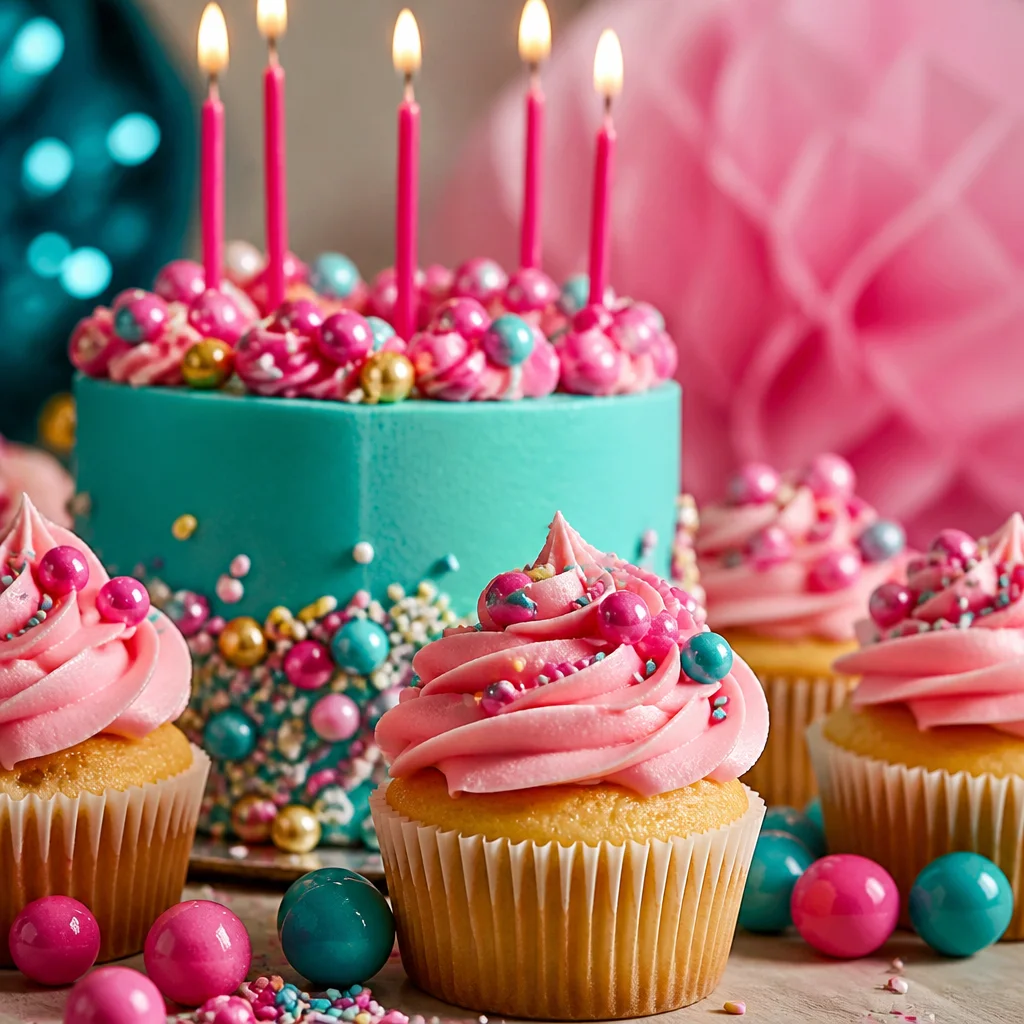
If you are nervous about a bright accent color, desserts are the easiest place to use it. A party based in soft blue and white can handle a flash of red through jelly beans, macarons, or berry-topped cupcakes. A mostly neutral palette can become more festive with a few neon sprinkles or vividly iced sugar cookies. Because the color appears in small, edible doses, it feels intentional rather than overpowering. This image shows a dessert close-up where the strongest shade in the palette appears mainly in candies, frosting details, and candle colors. That is a useful lesson for party styling: accent colors do not need to be everywhere. A few concentrated moments on the sweets table can wake up the whole room and tie in nicely with other small details like cutlery, drink stirrers, or favor tags.
Choose Table Details That Repeat Color at Child Height
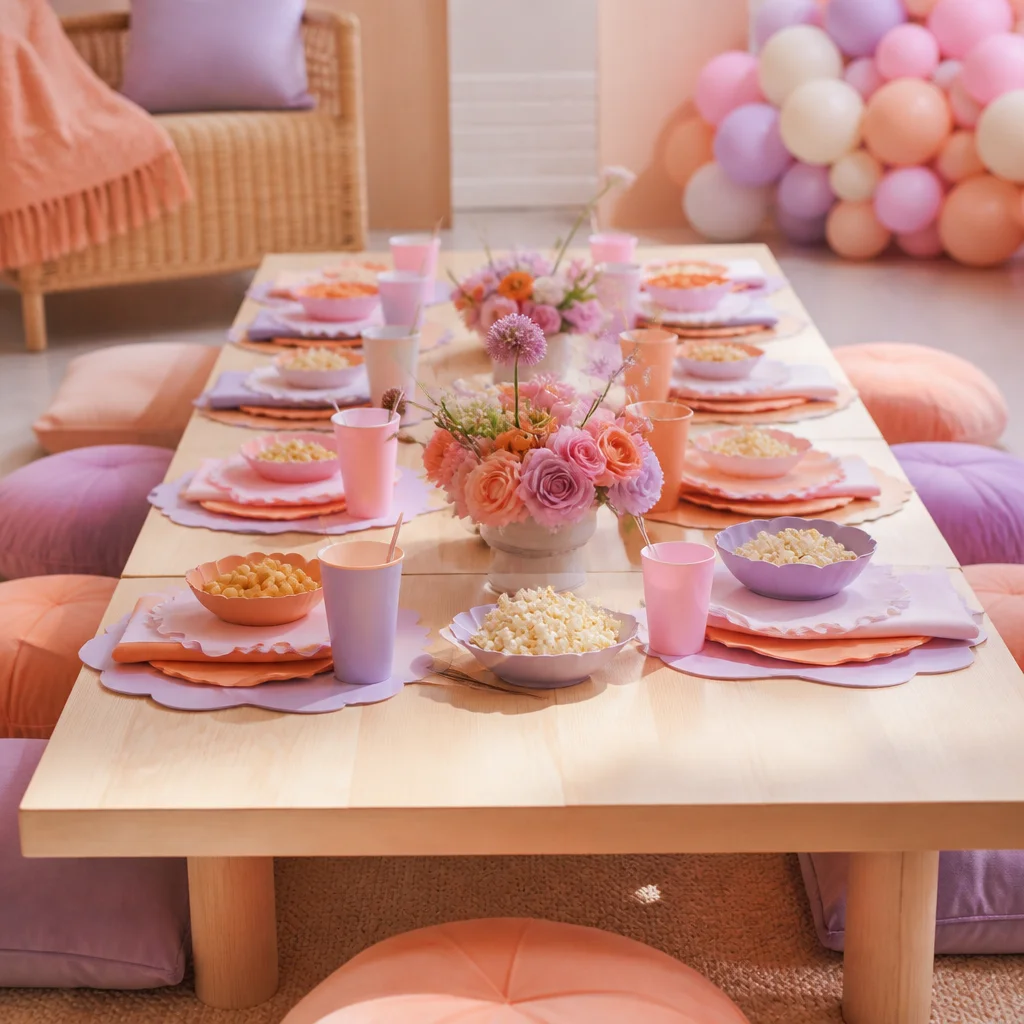
Adults often focus on backdrops, but children experience the party most directly at table level. That makes placemats, cups, napkins, snack bowls, and chair ribbons especially important. Repeating your palette in these lower details helps the setup feel immersive and gives the party a finished look in the spaces where guests actually sit, eat, and interact. It also makes photos of the children themselves look more connected to the overall styling. The picture here highlights a kids’ table with layered napkins, colored tumblers, and small centerpieces kept low enough for conversation. A practical trick is to alternate two palette colors down the table, then use the third on every place setting in a smaller way, such as a napkin ring or mini treat bag. This creates rhythm without requiring every seat to be identical.
Use White or Kraft as a Resting Space Between Brighter Shades
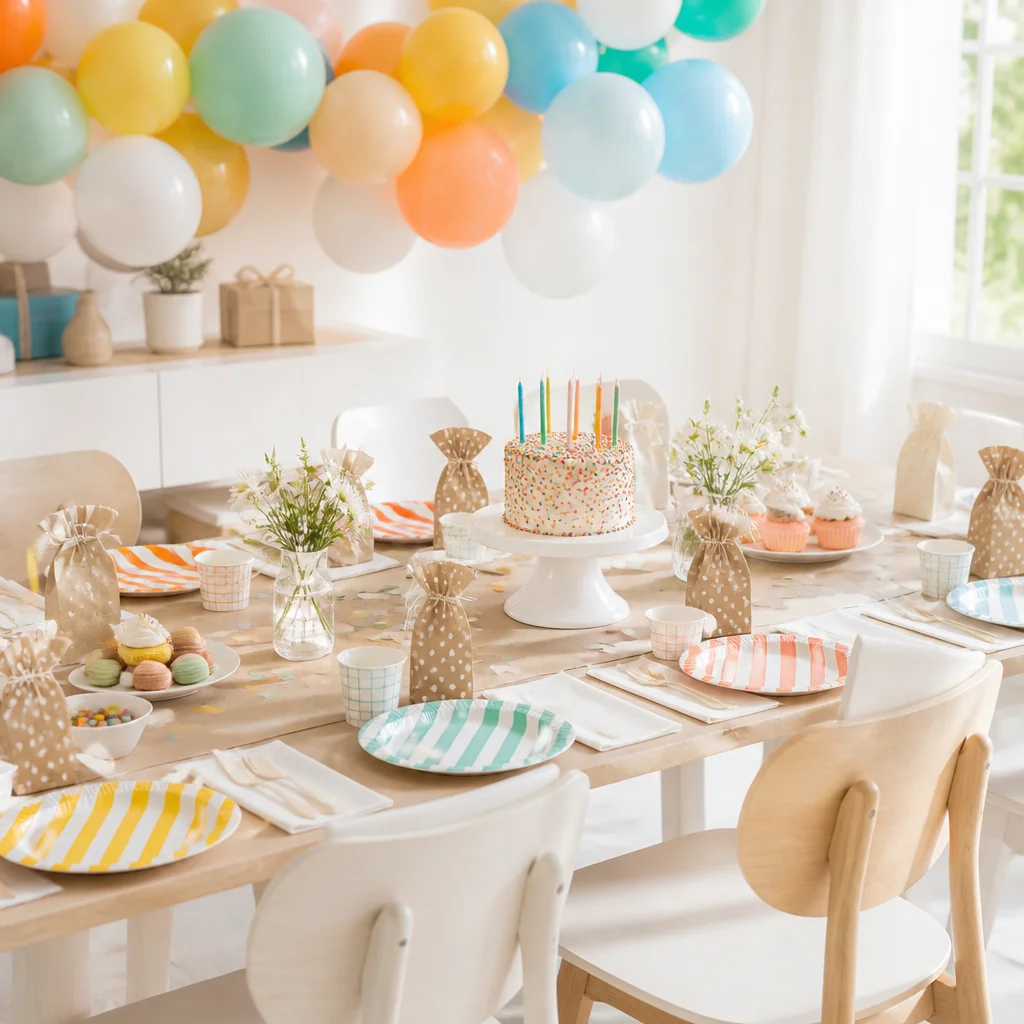
One reason some party palettes feel fresh is that they allow the eye to rest. White and kraft paper are useful balancing tools when you are combining energetic kid-friendly colors. White makes bright shades look cleaner and more modern, while kraft adds warmth and works particularly well with greens, blues, oranges, and yellows. Using one neutral backdrop also prevents the table from feeling cluttered when toys, snacks, and wrapped gifts start filling the room. In the image, bright plates and balloons stand out because they are set against a pale table covering and simple serving pieces. This is a strong reminder that not every object must carry color. Plain cake stands, white platters, and kraft favor bags create breathing room, making the palette itself feel more deliberate and helping the bolder details read clearly in photographs.
Match the Palette to the Party Mood, Not Just the Theme Name
A smart way to avoid generic party styling is to choose colors based on the feeling you want rather than the literal theme. A “jungle” party can be soft sage, sand, and apricot for a gentle daytime brunch feel, or emerald, teal, and marigold for a high-energy play party. A “space” birthday does not have to mean black and silver; it could lean into midnight blue, lilac, and icy mint for something dreamier and more original. The photo for this section shows a themed setup that feels distinctive because the colors are unexpected for the concept, yet still believable. That is the real advantage of palette-first planning. Once the mood is clear, every purchase becomes easier: you can pass on character-heavy supplies and choose solid-color pieces, fruit, flowers, and desserts that reinforce the same atmosphere in a more flexible way.
Finish With One Memorable Color Moment Guests Will Remember
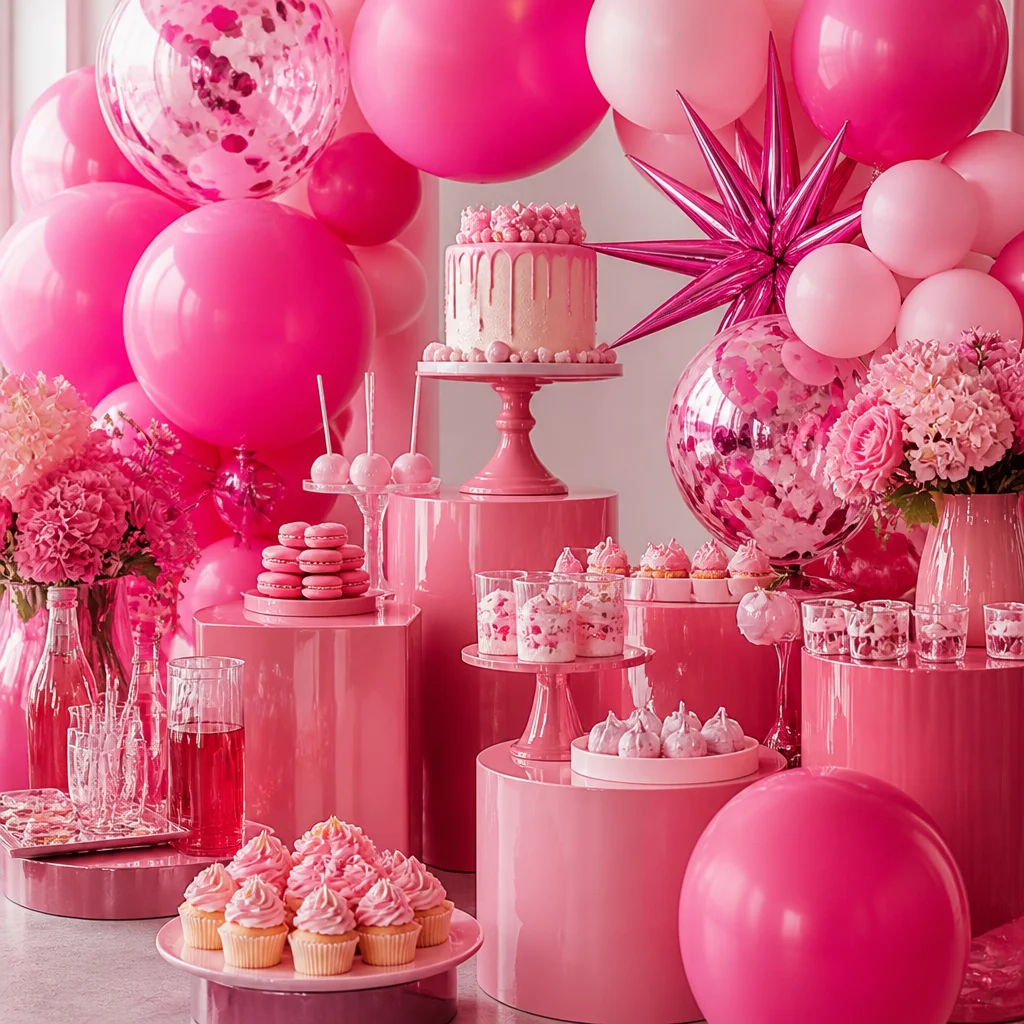
Every successful party palette benefits from one concentrated focal point. It might be a cake in the boldest color of the scheme, an oversized balloon bunch over the gift table, a rainbow-toned drink station, or a favor display arranged by shade. This single moment gives the party a visual anchor and makes the colors feel purposeful rather than casually scattered around the room. The final image captures a standout display where the palette peaks in one area through layered sweets, balloons, and tabletop accessories. When planning your own version, choose just one zone to push a little further than the rest. If the room is mostly soft and simple, let the cake station carry the strongest color mix. That contrast helps the palette feel exciting, memorable, and polished without turning the entire celebration into visual overload.
Images are AI-generated inspiration concepts.
Explore the categories ↗